
What Skipping This Costs You
Put this off until the first big storm rolls in off the Pacific and you're not looking at a minor repair bill anymore. A garage door that fails during high wind doesn't just stop working — it can buckle inward, rip off its tracks, or blow completely out of the opening. Once that happens, wind pressure gets inside the garage and pushes up on the roof from underneath, which is how a storm event turns into a roof or structural claim instead of a garage door claim. Add in whatever's parked or stored inside getting soaked, and a $200 maintenance visit this month starts looking very cheap compared to what you're risking by waiting.
Why the Garage Door Is a Home's Weakest Wall
Every other exterior wall on your house is a solid, continuous structure. The garage door is a large moving panel held in place by tracks, rollers, springs, and a handful of hinges — it's the single biggest opening in the building envelope, and it's built to move, not to resist pressure. When wind hits a closed garage door directly, that whole surface acts like a sail. If the door isn't properly reinforced, braced, and balanced, it can flex, pop out of the track, or fail at the panel seams well before the rest of the house shows any stress at all.
This matters more here than in a lot of places. Homes near the coast deal with salt-laden air that quietly corrodes hardware, springs, and fasteners over time, weakening exactly the components that are supposed to hold the door together under pressure. And if your house has already had seismic retrofit work done, it's worth knowing that wind bracing and earthquake bracing solve different problems — a seismic retrofit reinforces the house's connection to its foundation, but it does nothing for a garage door that isn't independently braced against lateral wind load.
Signs Your Door Won't Hold Up This Season
- Visible gaps around the edges when the door is closed — daylight showing through means wind and water are already getting past the seal.
- Rollers that look rusted, worn, or loose in their tracks, especially on doors facing the coast where salt air speeds up corrosion.
- Tracks that aren't perfectly parallel to the door, which you can often spot as a slight lean or wobble when the door moves.
- Panels with dents or hairline cracks, which weaken the structural integrity of the whole door even if they look cosmetic.
- A door that feels heavy, jerky, or unbalanced when lifted manually — a sign the springs are nearing the end of their service life and could let go under extra strain.
- Weatherstripping that's cracked, flattened, or peeling away from age and sun exposure during the dry months.
What Actually Protects the Door Before Storm Season
Reinforce and Realign the Tracks
Loose or bent tracks are the most common reason doors come off their rails during wind events. Tighten every bracket, check that tracks are plumb and parallel, and replace any bent sections now rather than after a storm has already stressed them further.
Inspect and Replace Rollers and Hardware
Nylon rollers tend to hold up better long-term than steel in salt-air environments, and they run quieter too. If your rollers are pitted with rust or visibly worn down, replacing them before winter is far cheaper than dealing with a roller failure mid-storm.
Check Spring Balance
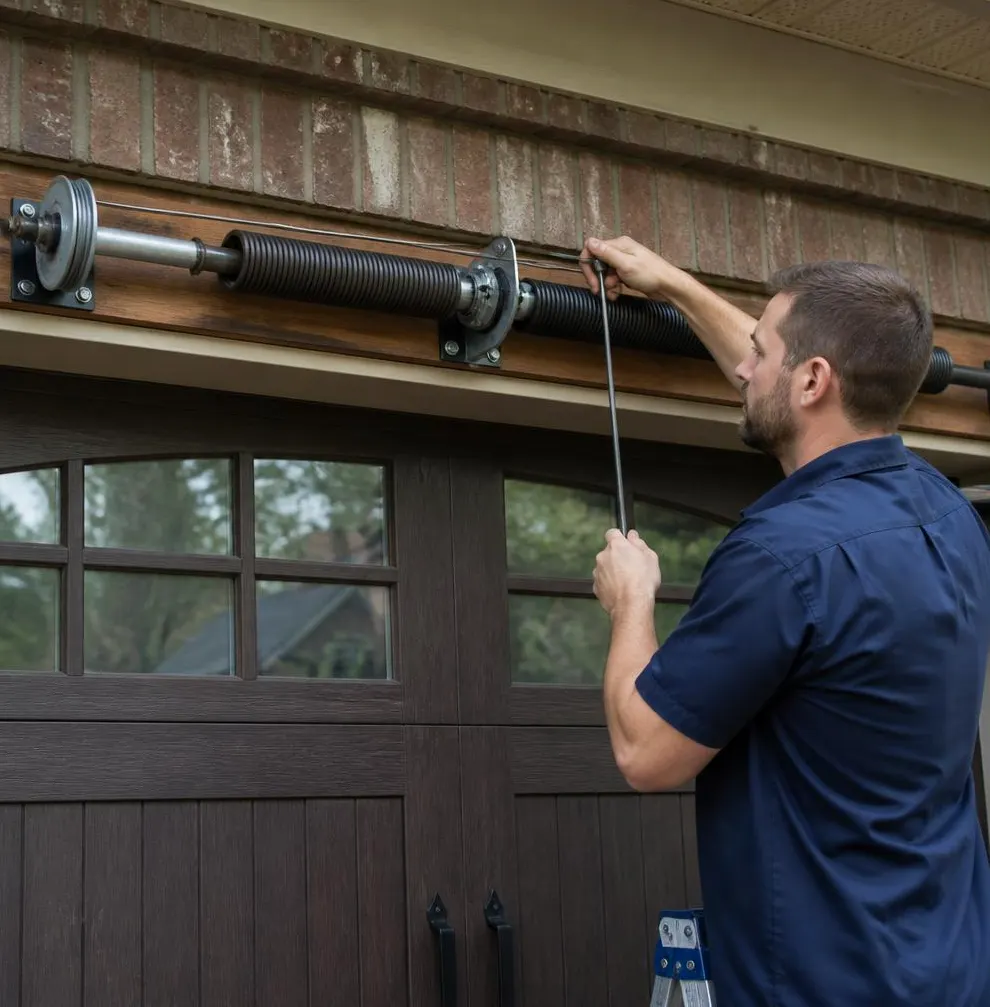
Disconnect the opener and lift the door manually. It should move smoothly and stay roughly in place when you let go partway. If it slams down or feels unusually heavy, the springs are losing tension and won't provide the support needed to keep the door stable under wind pressure. Springs are under extreme tension and are not a safe do-it-yourself fix.
Replace Weatherstripping
New bottom seals and side weatherstripping keep wind-driven rain from pushing underneath the door and help the door resist flex at the edges, where failures often start.
Consider a Wind-Load Bracing Kit
For older doors without factory wind bracing, retrofit kits add horizontal struts across the panels. This is one of the most effective upgrades for homes that regularly face coastal gusts, and it's a reasonable trade-off against the cost of a full door replacement after storm damage.
Test the Auto-Reverse and Battery Backup
Power outages are common during winter storms. If your opener doesn't have battery backup, you'll be stuck manually operating a heavy door in bad weather — worth addressing before the rainy season peaks, not during it.
When to Call Daly City Garage Door
If your door is showing any of the warning signs above, or it's simply been a year or more since anyone's looked at the springs, tracks, and hardware, schedule a Garage Door Maintenance visit before the next storm system moves through. We'll check balance, hardware condition, and weatherstripping, and flag anything that's a liability in high wind. If your springs are visibly worn or the door feels off-balance, our Spring Repair & Replacement service handles that safely — this isn't a job to attempt yourself given the tension involved. And if a storm has already caused a problem, our Emergency Garage Door Service is there to get your door secured and functional again without a long wait.
Don't wait for the first atmospheric river of the season to find out your door isn't ready. Call Daly City Garage Door today to schedule a storm-readiness inspection anywhere in Daly City, CA and the surrounding area.